About the book
House of Leaves by Mark Z. Danielewski is a novel that completely breaks away from traditional narration. Published in 2000, it gained a cult reputation thanks to its experimental approach: storytelling, inventive typography, unconventional layouts.
Synopsis
The story centers around a mysterious document called “The Navidson Record”, describing a strange phenomenon in an American family’s house. Will Navidson, a photojournalist, lives with Karen and their children in a house that hides a baffling peculiarity: it’s bigger on the inside than on the outside.
As the exploration of this shifting space progresses, the story becomes a plunge into dread and the unknown. In parallel, we follow Johnny Truant, a young man who discovers the manuscript and whose reading of it triggers a slow descent into obsession and mental instability.
These two stories intertwine and blur the line between reality and fiction. The novel also questions how the stories we read shape our perception of the world.
A reading experience out of the ordinary
What immediately stands out about House of Leaves is its layout. Some pages read normally, others force you to turn the book, decipher marginal passages, or follow text that moves around the page.
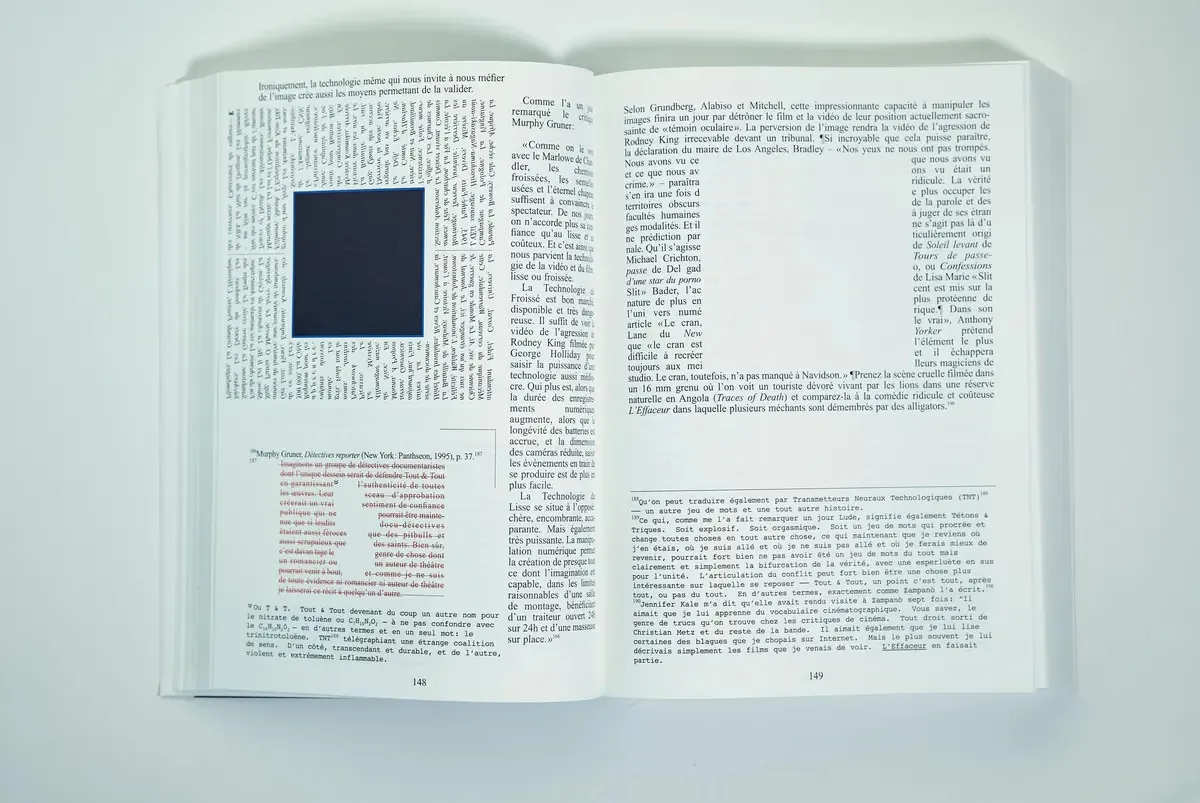
These typographic choices reinforce the immersion and make you physically feel the labyrinthine nature of the story.
My thoughts
House of Leaves is a demanding but fascinating book. This reading complexity is part of the experience: you move through this novel like through a labyrinth, accepting to get lost in order to be surprised.
You don’t read this book quickly. Every page demands attention, and that’s exactly what makes it memorable.
It won’t suit everyone, but for those willing to stick with it, it’s worth the detour. Danielewski proves that a book can be as much an object as a story. It’s one of the most striking works I’ve read.